21. Design Mini Logistics Platform
01 Understanding the Problem
1.1 Functional Requirements
info
从核心角色出发,定义系统功能需求.
Starting from the goals of core user roles, define the functional requirements of the system.
- Seller
- Create shipping orders to the Platform's Warehouse (bulk select orders, create based on item numbers and size)
- Receive shipping label of carrier like USPS
- Check the logistics status of shipping orders 查看发货单的物流状态
- Money/Discount/Payment/Settlement
- Manage payment methods, view settlement records (e.g., shipping fees deducted), apply platform-provided discounts
- Dispute/Rating
- Buyer
- Track the logistics status of shipping orders
- Get notification of shipping status changes
- View Invoice
- Dispute/Customer Support Service
- Warehouse
- Receive and store items from sellers (record, validate and update inventory)
- Validate shipping orders, like item quantity, item condition, shipping address etc.
- Sort items for outbound shipping 出库分拣
- Shipping through USPS and other carriers
- Monitor warehouse operations (e.g., order processing efficiency, inventory accuracy) and resolve warehouse-related exceptions
- Platform
- Provide API interface for Seller and Buyer to connect the system
- Return/Refund
- Money Reconciliation 资金对账
- Clearing and Settlement System (Who Gets What, When and How to Pay) 清分和结算系统
- Notify Seller and Buyer of shipping status changes
- Monitor system operation status to ensure high availability 监控系统运行状态,确保高可用性
- Metrics and Analytics
- User: Dispute rate, misdelivery rate, user feedback 争议率、错发率、用户反馈
- System: Success rate, latency, error rate
- Deal with disputes between buyers and sellers
- Integrate with logistics carrier systems (e.g., USPS) for shipping label generation, tracking data
- Shipping fee rules/discounts/payment
- Address validation, normalization, and management
1.2 Non-Functional Requirements
- 数据一致性
- 跨模块数据(如订单状态与库存数量、物流轨迹与账单金额)需保持实时一致,通过分布式事务或最终一致性机制(如消息队列重试 + 补偿逻辑),避免出现 “订单已发货但库存未扣减”“物流显示签收但账单未生成” 等矛盾场景。关键数据(如库存、结算金额)的变更需记录版本日志,支持回溯校验。
- 可靠性与可用性
- 系统需保证 99.9% 以上的可用性,核心物流节点(如订单状态同步、库存更新)不出现单点故障,通过数据实时备份和故障自动切换机制,避免因系统中断导致物流停滞。
- 性能与响应速度
- 关键操作(创建发货单、物流状态查询)响应时间不超过 1 秒,支持日均 10 万级订单处理量,在促销等高峰时段可弹性扩容,确保批量订单分拣、物流轨迹同步不延迟。
- 数据安全与权限控制
- 买卖双方地址、支付信息等敏感数据全程加密存储和传输,通过角色权限隔离(如卖家仅能查看自身订单、仓库无权修改结算数据)防止信息泄露,同时保留关键操作日志用于追溯。
- Usability 易用性
- 系统界面应简洁直观,支持多语言,降低使用门槛和培训成本
03 Propose High-Level Design
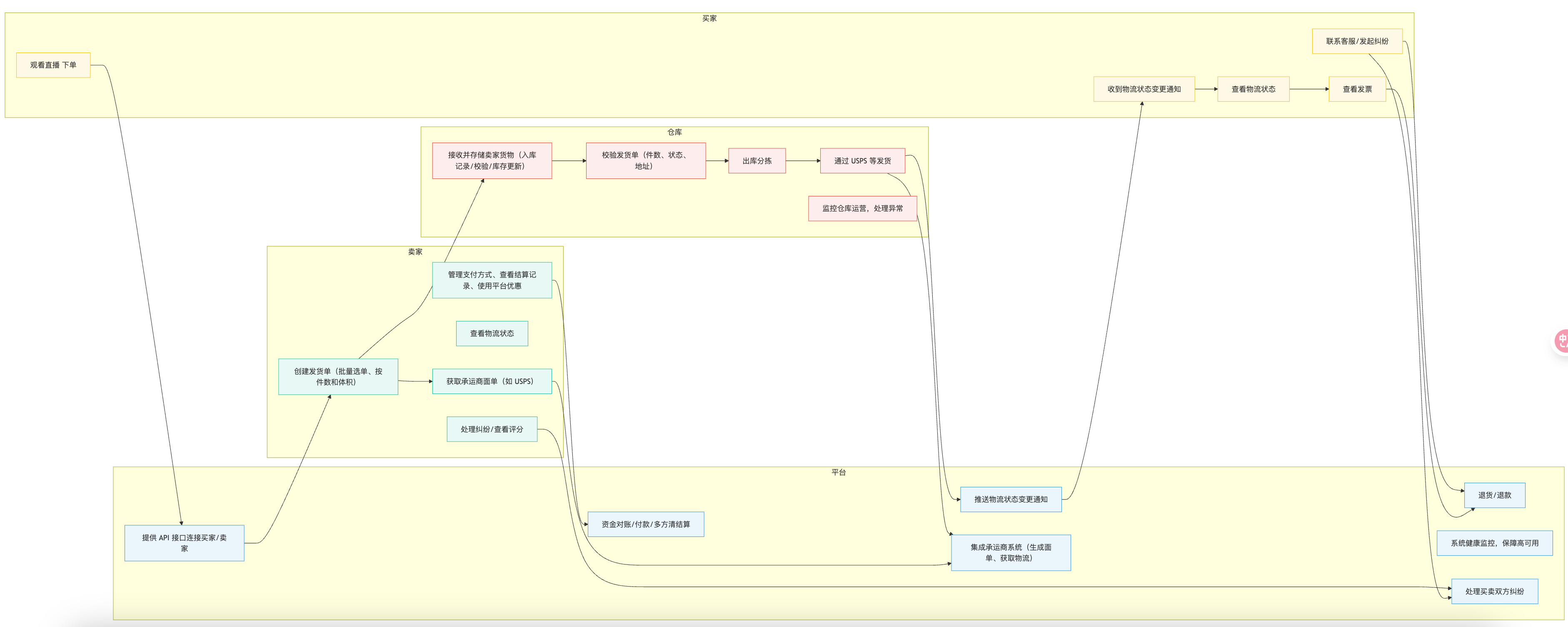
3.1 Role-based Swimlane Diagram 角色泳道图